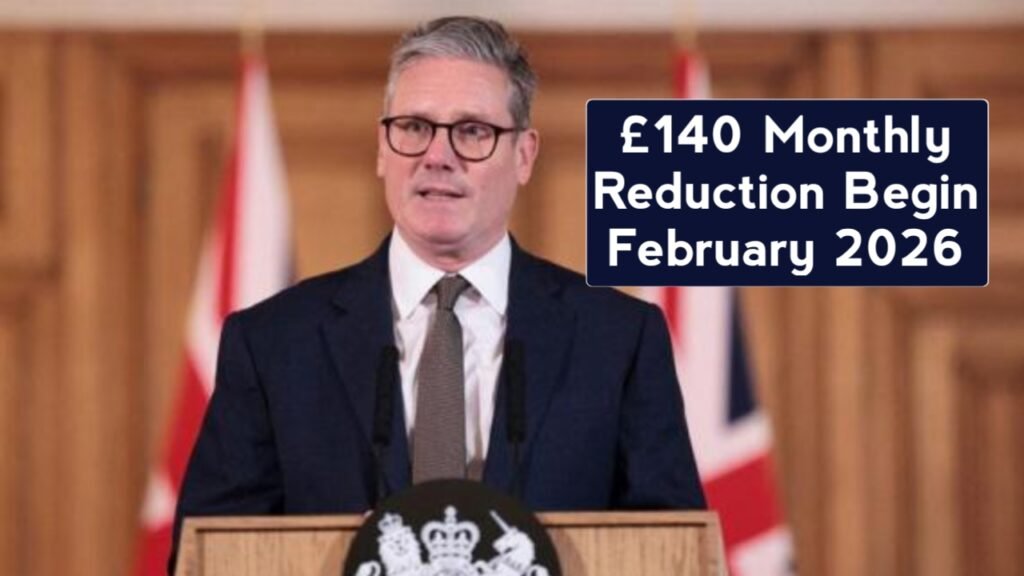
Hello Everyone, The financial landscape for UK residents is witnessing a significant shift this month. As we enter February 2026, many households are waking up to news of a substantial “technical adjustment” in government support. For those relying on the State Pension and specific welfare benefits, the announcement of a £140 monthly reduction has caused a wave of concern. While government officials describe this as a “rebalancing” of the system, the reality on the ground is that thousands of people will now have to manage their budgets with a little less in their pockets.
Understanding why this is happening is key to navigating the change. The reduction isn’t a random cut but is linked to new “harmonisation” rules and a review of past contribution credits. Essentially, the Department for Work and Pensions (DWP) has completed a massive audit of how overlapping benefits and state pension credits are calculated. For a specific group of claimants, this has resulted in a downward revision of their monthly entitlement by approximately £140, effective immediately from the first payment cycle of February.
Why the £140 Reduction is Happening Now
You might be wondering why this change is taking place right now. The UK government has been under pressure to streamline the welfare and pension systems to ensure long-term sustainability. Officials argue that these recalculations are necessary to correct past overpayments and to align older pension rules with the current New State Pension framework. It is part of a broader strategy to move away from temporary “uplifts” that were introduced during previous economic crises, returning the system to a more standardized baseline.
However, the timing has been a point of contention for many. February is traditionally a month where energy bills remain high, and the cost of living continues to bite. For a retiree or a family on a tight budget, losing £140 a month is equivalent to losing over £1,600 a year. This amount often covers essential costs like a weekly grocery shop or the monthly heating bill. The government insists that the system is now “fairer,” but for those affected, the “fairness” feels like a financial shock.

Who is Most Affected by the Change?
Not everyone in the UK will see their income drop. This specific £140 reduction is targeted at individuals whose records showed “overlapping entitlements” or those who were receiving certain legacy credits that are now being phased out. Most people affected have already received a brown envelope from the DWP detailing their new award amount. If you haven’t received a letter and your payment remains the same, you likely fall outside the group impacted by this specific February “correction” policy.
It is particularly important for pensioners who reached State Pension age before April 2016 to check their statements. The interplay between the “old” rules and the “new” system is where most of these calculations have been adjusted. Additionally, some claimants who transition between different benefit types—such as moving from a disability-related top-up to a standard pension rate—are seeing these reductions as the system “normalizes” their account based on the 2026 criteria. Key Groups to Watch
- Mixed-Age Couples: Those where one partner is over state pension age and the other is not.
- Legacy Benefit Claimants: Individuals still receiving older versions of income support or housing help.
- Pre-2016 Pensioners: Retirees who may have had complex National Insurance records.
- Recalculated Credit Holders: Anyone who recently had their past contribution years audited by the DWP.
How to Check Your New Payment Level
The most effective way to see how you are affected is to look at your bank statement or your online “My Pension” portal. The February payment will be the first to reflect the lower amount. If you notice a drop of exactly or around £140, it is likely due to these new rules. It is recommended to compare your February statement with your January one to identify the exact difference. This will help you recalculate your monthly household budget before other bills arrive.
If you believe there has been an error—which can happen during such large-scale system updates—you have the right to ask for a “Mandatory Reconsideration.” This is a formal process where a different official looks at your case to ensure the £140 reduction was applied correctly to your specific circumstances. Don’t wait too long to do this; there are usually strict time limits (often one month from the date of your new award letter) to lodge an appeal or a query.
Finding Extra Support in 2026
While the news of the reduction is difficult, there are still other avenues of support available in the UK. The government has confirmed that the Warm Home Discount remains active for the 2025/2026 winter season, providing a £150 one-off rebate on electricity bills for those on low incomes. Additionally, while the £140 reduction is a permanent adjustment for many, there are “discretionary” funds available through local councils for those facing immediate financial hardship.
It is also worth checking if you are eligible for Pension Credit. Millions of pounds in Pension Credit go unclaimed every year because people assume they have too much in savings or a small private pension. Even if you only qualify for a tiny amount of Pension Credit, it can act as a “passport” to other help, such as free TV licences for over-75s or help with NHS dental costs, which could help offset the £140 loss you might be experiencing this month.

Immediate Steps to Take
- Audit Your Direct Debits: Review any non-essential subscriptions to free up cash.
- Check Pension Credit: Use the official GOV.UK calculator to see if you are missing out.
- Contact Your Council: Ask about the “Household Support Fund” if you cannot pay for food or fuel.
- Seek Professional Advice: Speak to Citizens Advice or Age UK for a free benefit check-up.
Looking Ahead to April 2026
There is a small glimmer of hope on the horizon. While February brings a reduction for some, the traditional annual uprating of benefits and the State Pension is scheduled for April 2026. The government has confirmed that the “Triple Lock” remains in place, which means the State Pension is set to rise by 4.8% this year. For many, this April increase will eventually help to “soften the blow” of the February reduction, though it won’t fully replace the lost £140 for everyone.
It is a period of transition for the UK’s social security system. Between the February “corrections” and the April “increases,” the next few months will require careful financial planning. The goal of the DWP is to have a fully digitalized and “harmonized” system by the end of 2026. For now, staying informed and proactive is the best way to ensure that your household stays afloat during these significant policy shifts.
Conclusion
The £140 monthly reduction starting in February 2026 marks a challenging chapter for many UK pensioners and benefit recipients. While the government maintains that these technical adjustments are vital for a balanced economy, the personal impact on individual lives cannot be ignored. By understanding the rules, checking your eligibility for alternative supports like Pension Credit, and preparing for the April uprating, you can better navigate these changes. Always stay vigilant, check your official mail, and don’t hesitate to seek expert advice if your income has taken an unexpected hit.
Disclaimer: This article provides general information regarding UK government updates as of February 2026 and does not constitute official financial or legal advice. Benefit eligibility and payment amounts can vary based on individual circumstances. For personalized guidance, please consult the official GOV.UK website or a qualified advisor from Citizens Advice.